
Nearly four decades ago, when Rakesh Jhunjhunwala was a young chartered accountant in training, he was paid a conveyance of Rs 60. Deductions would take away Rs 15 from this princely sum and he was left with Rs 45 by the time the allowance made its way to his hands. He would save as much as he could from this amount, so that he would have a small amount to spend when he met his friends on the weekend at Chicken Centre. This was an eatery popular with the young at the time, perhaps because food and drink were affordable even for those new to the workforce.

'Gift-giving' - from free dinners and drug samples to promotional merchandise - seems to be driving drugmakers' marketing - a marketing prescription deeply entrenched in the industry. This is a well-oiled racket that sees pharmaceutical (pharma) companies 'gifting' doctors to push their respective drugs under the guise of marketing. But is there a cure in sight to end this unhealthy alliance? The recent controversy following the income-tax raids on Bengaluru-based drugmaker Micro Labs, makers of popular paracetamol brand Dolo-650, has brought this to the fore, again.

George Acland from Great Britain ran a coffee plantation in Sri Lanka and set up India's first jute mill in 1855. He raised capital and imported the machinery for the mill on the banks of the Hooghly in West Bengal. His company wasn't a great success, but his pioneering work paved the way for India to dominate the jute industry.

'The tie-up with Serum Institute Life Sciences brings to the table their strengths in manufacturing and also their vaccine portfolio.'

'We are trying to salvage 50-100 million doses of Covishield with the latest drive on booster doses.'
Bulk of the medicine sales in the $22-24 billion domestic pharma market happens through offline retail chemists. With the entry of online pharmacies, this space has started to witness a shake-up. Sample this: Dawaa Dost, a Rajasthan based digital health start-up, generates medicine orders from 'kirana' stores and women self-help groups (SHGs) that operate in villages, and then service these orders through its affiliated network of pharmacies. Biddano, another health-tech start-up, has a platform that acts as an aggregator for neighbourhood chemist shops.

The number of serious incidents has more than doubled in the last seven years.

Investors are pushing back more often against companies' resolutions on what is paid out to top executives. In the first four months of financial year 2022-23 (FY23), there have already been five such rejections, according to shareholder voting data from tracker Adrian, a platform maintained by the proxy advisory firm Institutional Investor Advisory Services India (IiAS). Two of these have been at multiplex chain PVR and direct-to-home company Dish TV India.

During Abe's tenure, Japan had announced support for a number of major projects. These included the bullet train project between Mumbai and Ahmedabad, besides allocations for a freight corridor between Mumbai and New Delhi.

India's medical devices imports surged 41 per cent to touch Rs 63,200 crore in 2021-22, led by a 48 per cent year-on-year (YoY) jump in imports from China to Rs 13,538 crore, the commerce ministry data analysed by the Association of Indian Medical Device Industry (AiMeD) has showed. Local industry players say this has led to several small and medium units to shut shop. Rakesh Vaid of Usha Fabs, a garments exporter, had started making N95 masks in his Gurgaon factory during the peak of the Covid-19 pandemic.

The central government has for the first time allowed a private company, Bajaj Healthcare, to process opium to extract alkaloids used to make pain-killers, cough syrups, and even cancer drugs. Two government factories in Ghazipur, Uttar Pradesh, and Neemuch, Madhya Pradesh, do the work yet, processing some 800 tonnes of opium gum annually to extract alkaloids. The government on Tuesday gave Thane-based Bajaj Healthcare an initial contract to process 500 tonnes of opium gum annually and wants production to be at 800 tonnes per annum (tpa) in the next five years, indicating the state's exit from the highly-regulated sector.

Most of the long-only funds are closed-ended. This means that investors have to lock in their money for a fixed period before they can take it back.

Amid news of a fuel shortage in some parts of the country and wider unrest over fuel issues in the neighbourhood, an analysis of the data from international tracker globalpetrolprices.com shows that the per litre price of petrol is higher in India than in seven out of its nine neighbours.

The total amount of money various entities have raised through the private placement route is at its lowest since 2014. They raised a total of Rs 1.96 trillion in the first five months of 2022, revealed the numbers from PRIME Database. It is down 23.4 per cent from the Rs 2.56 trillion raised in the corresponding period in 2021.
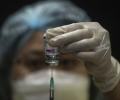
Pune-based Serum Institute of India (SII) is sitting on 200 million doses of Covishield that were manufactured in December and are set to expire in September. The company is likely to destroy these vaccines if nothing works out, Sohini Das reports.

'There will be ups and downs, and we have to plan how we live with it now.'

A strong performance by sectors including banking raised the profits of Indian companies by 28 per cent in the three months ended March 2022. The rate of growth is, however, lower than the 30 per cent seen in December. Growth in net sales was also lower than what was seen in the December quarter for the sample under consideration.

The Drugs Controller General of India has approved the manufacture of this Sars-CoV-2 spike protein recombinant nano-particle vaccine for 'examination, test, and analysis', reports Sohini Das.
Medicine sales grew at a fast clip in smaller cities like Madurai, Meerut, Agra, and Varanasi in the last 12 months. The domestic pharmaceutical market, overall, has grown 12.3 per cent in this period, according to data from IQVIA MAT for April. MAT refers to the moving annual turnover or the turnover of the last 12 months. The data further showed that the top 30 cities contributed around 32 per cent to sales.
With all major US export-oriented drug manufacturing plants in the country up for inspection in 2022, some estimates peg that at least 20-30 per cent of the new product launches lined up for the US will be subject to on-site inspection by the US Food and Drug Administration (USFDA). The last two years saw limited physical inspections due to travel restrictions during the pandemic. "Pre-Covid, the frequency and number of inspections of manufacturing plants in India by USFDA had increased significantly," analysts from ICICI Securities Research noted. "With growing ANDA filings, especially for complex products. "We expect this trend to return with the environment normalising," analysts from ICICI Securities Research noted.
 © 2026 Rediff.com - Investor Information - Advertise with us - Disclaimer - Privacy Policy - Sitemap - Feedback - About us - Terms of use - Grievances